
Products · Electronic shelf labels
Electronic Shelf Labels, 1.54″ to 7.5″
E-Ink price tags in twelve sizes, in a standard range and a frozen range, with the gateway and the cloud platform that drive them. We supply the hardware and the integration points; the pricing logic stays in your ERP.
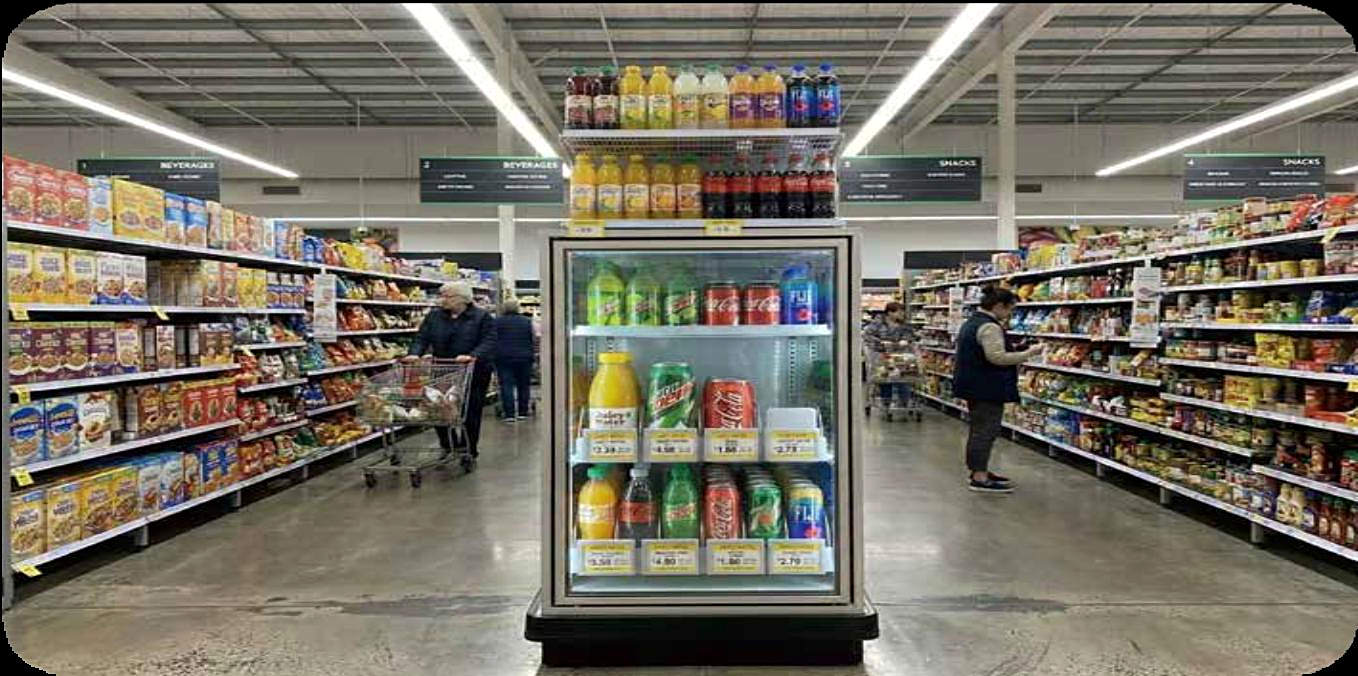
What changes when the label is electronic
A paper label is printed once and then wrong. An electronic shelf label is a bistable E-Ink panel that holds its image with no power at all, and redraws in seconds when the price changes — from the head office, across every store, without anyone walking the aisle.
| Item | Detail |
|---|---|
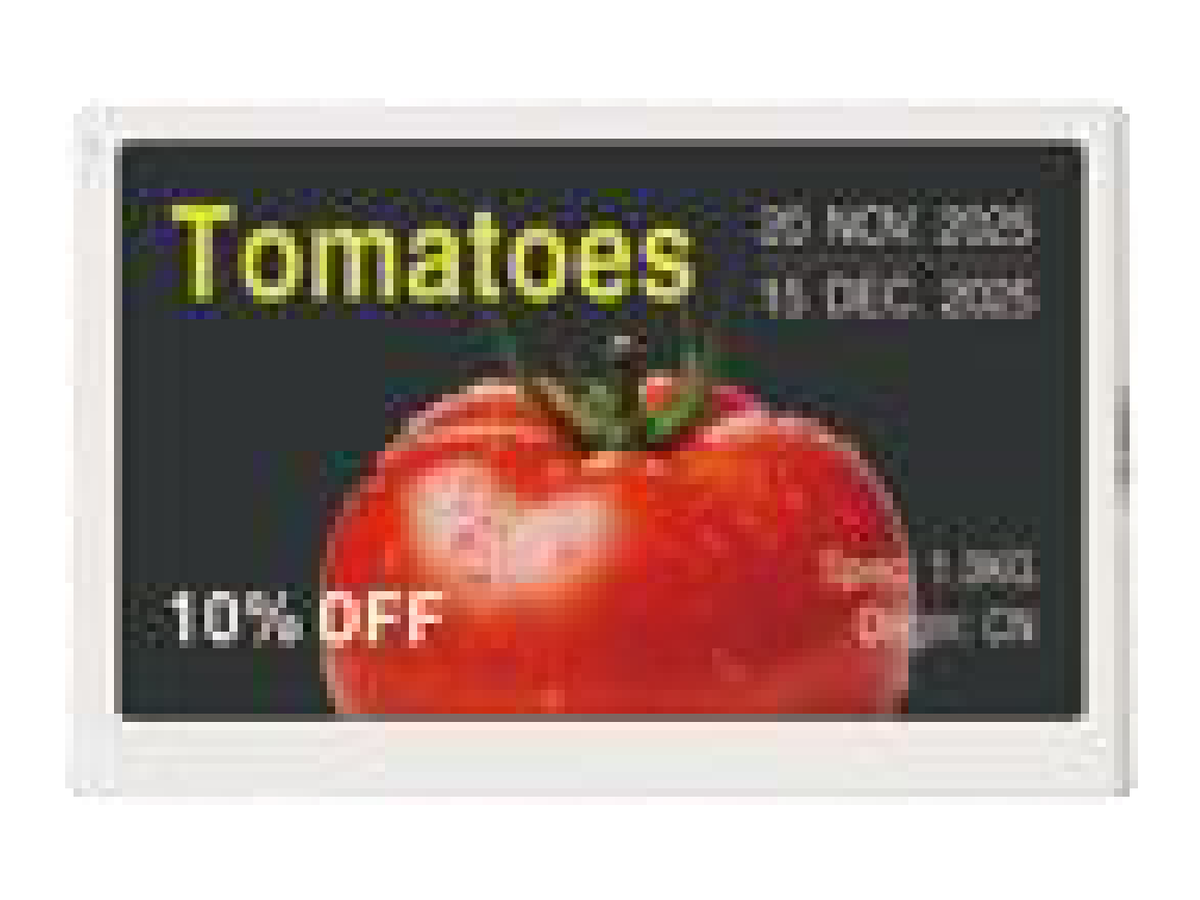
| Display | Bistable E-Ink, four colours: black, white, red, yellow |
| Refresh | A price, a QR code or a product image updates within 3 seconds |
| Radio | 2.4 GHz between the tag and the gateway |
| Data preloading | Several pages stored on the tag, so switching between them is instant and does not need the network |
| Battery | Specified for a five-year service life |
| Enclosure | Standard white; other colours to order for retail chains that brand their fixtures |

The tag range
Twelve models from 1.54″ to 7.5″. Every one is a four-colour E-Ink panel; what changes with size is the resolution and the amount of information the label can carry. All dimensions are the overall body, not the display.
| Model | Screen | Resolution | Overall dimensions | Display area | Operating temp. |
|---|---|---|---|---|---|
| XameTag0154 | 1.54″ | 200 × 200 | 51.5 × 35.5 × 11.5 mm | 27.0 × 27.0 mm | 0–40 °C |
| XameTag0213 | 2.13″ | 250 × 122 | 69.4 × 32.9 × 11.5 mm | 48.5 × 23.7 mm | 0–40 °C |
| XameTag0266 | 2.66″ | 296 × 152 | 82 × 42 × 11.5 mm | 60.0 × 30.7 mm | 0–40 °C |
| XameTag0266F | 2.66″ | 296 × 152 | 82 × 42 × 11.5 mm | 60.0 × 30.7 mm | −10–40 °C |
| XameTag0270 | 2.7″ | 300 × 200 | 79.9 × 49.5 × 11.5 mm | 57.27 × 38.18 mm | 0–40 °C |
| XameTag0290 | 2.9″ | 296 × 129 | 89 × 42.4 × 11.5 mm | 66.9 × 29.06 mm | 0–40 °C |
| XameTag0350 | 3.5″ | 384 × 184 | 102 × 50.8 × 11.5 mm | 79.68 × 38.18 mm | 0–40 °C |
| XameTag0420 | 4.2″ | 400 × 300 | 103 × 84.3 × 11.7 mm | 84.8 × 63.6 mm | 0–40 °C |
| XameTag0420W | 4.2″ | 400 × 300 | 108 × 86.3 × 14.7 mm | 84.8 × 63.6 mm | 0–40 °C |
| XameTag0430 | 4.3″ | 522 × 152 | 127.2 × 42.4 × 11.5 mm | 105.44 × 30.7 mm | 0–40 °C |
| XameTag0583 | 5.83″ | 480 × 648 | 137.4 × 106.8 × 11.7 mm | 118.78 × 88.22 mm | 0–40 °C |
| XameTag0750 | 7.5″ | 800 × 480 | 182.2 × 118.5 × 11.7 mm | 163.20 × 97.92 mm | 0–40 °C |
The 2.66″ model marked F is the frozen variant — the same footprint, sealed and specified down to −10 °C for freezer and chilled display. The 4.2″ model marked W is the thicker, sealed version for wet positions. Tell us the aisle temperature and we will say which one.
The gateway is the part people underestimate
Tags are cheap and easy; the radio planning is where rollouts go wrong. One base station covers roughly 2,000 m² indoors — a radius of up to 30 metres — and manages up to 5,000 tags. A tag that loses its gateway re-associates with a neighbouring one by itself, so a store does not go dark because one unit failed.
| Item | Detail |
|---|---|
| Coverage | Approx. 2,000 m² per base station indoors, radius up to 30 m |
| Capacity | Up to 5,000 tags per base station |
| Tag radio | 2.4 GHz |
| Status display | Built into the gateway, so a fault is visible on the ceiling rather than in a log |
| Commissioning | Pre-configured at the factory; power it and it joins the network |
| Failover | Tags search for a neighbouring gateway and move to the better signal automatically |
The manufacturers’ own comparison is two hours of a technician’s time for a conventional rollout against about five minutes for plug-and-play. Treat that as their figure, not ours — the number depends entirely on how many gateways a store needs, which is a floor plan question.
Where the prices actually come from
An ESL system is not a display product with a database bolted on; it is the other way round. The platform is where the work lives, and it has to talk to whatever already holds your prices.
| Item | Detail |
|---|---|
| ERP integration | API connection to existing ERP and price systems; open API for anything else |
| Store scale | No fixed limit on the number of stores; the platform is specified for tens of millions of tags |
| Editing | Visual template editor, so a promotion is laid out rather than coded |
| Client devices | Desktop, laptop, tablet and phone — the same account, no installed client |
| Deployment | Cloud or on-premise, depending on where your data is allowed to sit |
Where they go
| Sector | Why an ESL |
|---|---|
| Supermarket and convenience | Price integrity across thousands of lines, promotional periods that start at midnight |
| Fresh and frozen | The F variant runs at −10 °C behind glass where paper labels fog and fall off |
| Pharmacy and beauty | Small tags, high line counts, frequent price changes on promotions |
| Electronics and 3C | The larger panels carry a product image, a spec line and a QR code to the detail page |
| Fashion and apparel | Colour and size on the same label, updated per season |
If you are already buying indoor digital signage or self-service kiosks from us, an ESL rollout is the same account, the same production and the same paperwork.
Scope an electronic shelf label rollout
Tell us the store format, roughly how many tags and which aisles are chilled or frozen. You get the recommended model mix, the gateway count for your floor plan, the certification set for your market, MOQ, tiered pricing and a lead time within one business day.