
Applications
Interactive panels for classrooms and meeting rooms
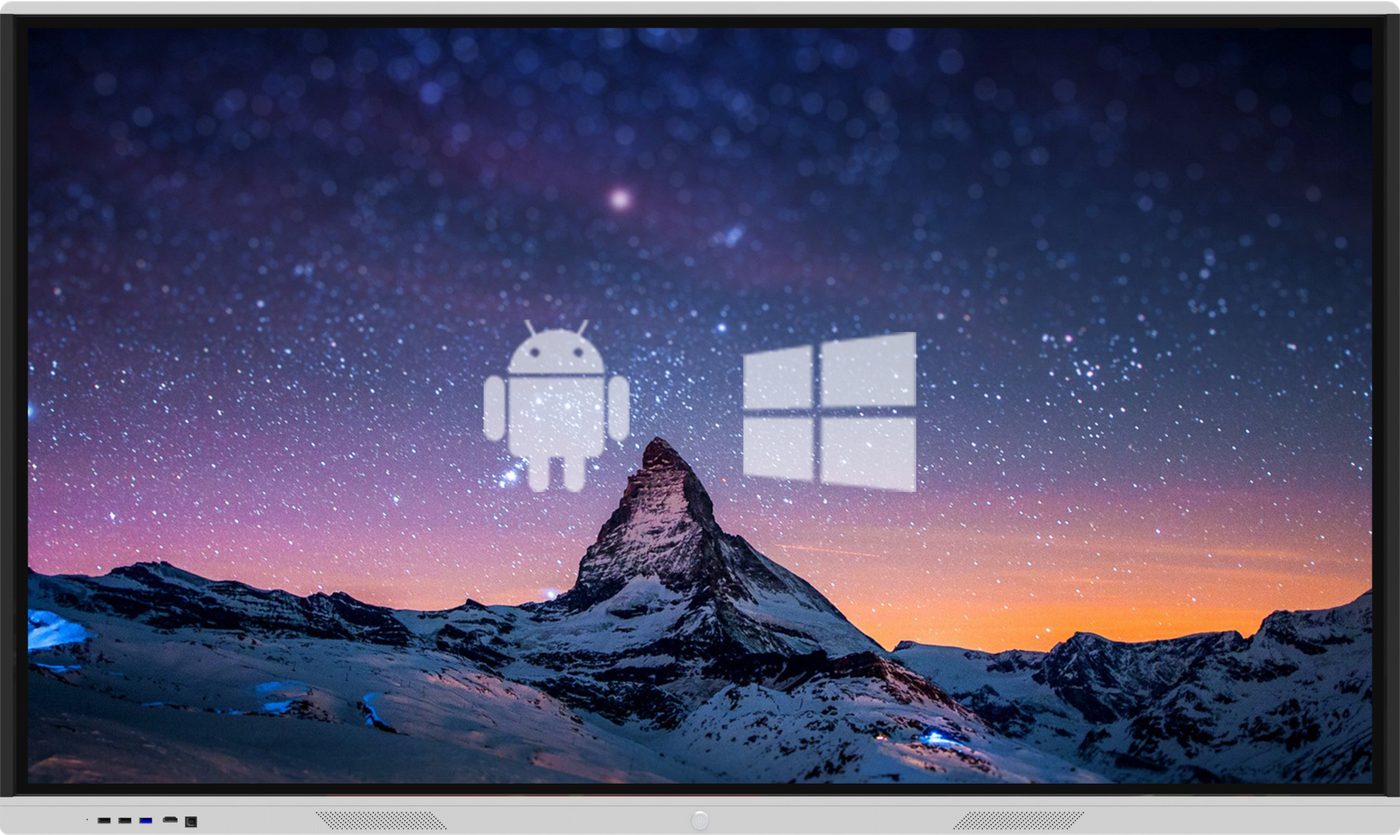
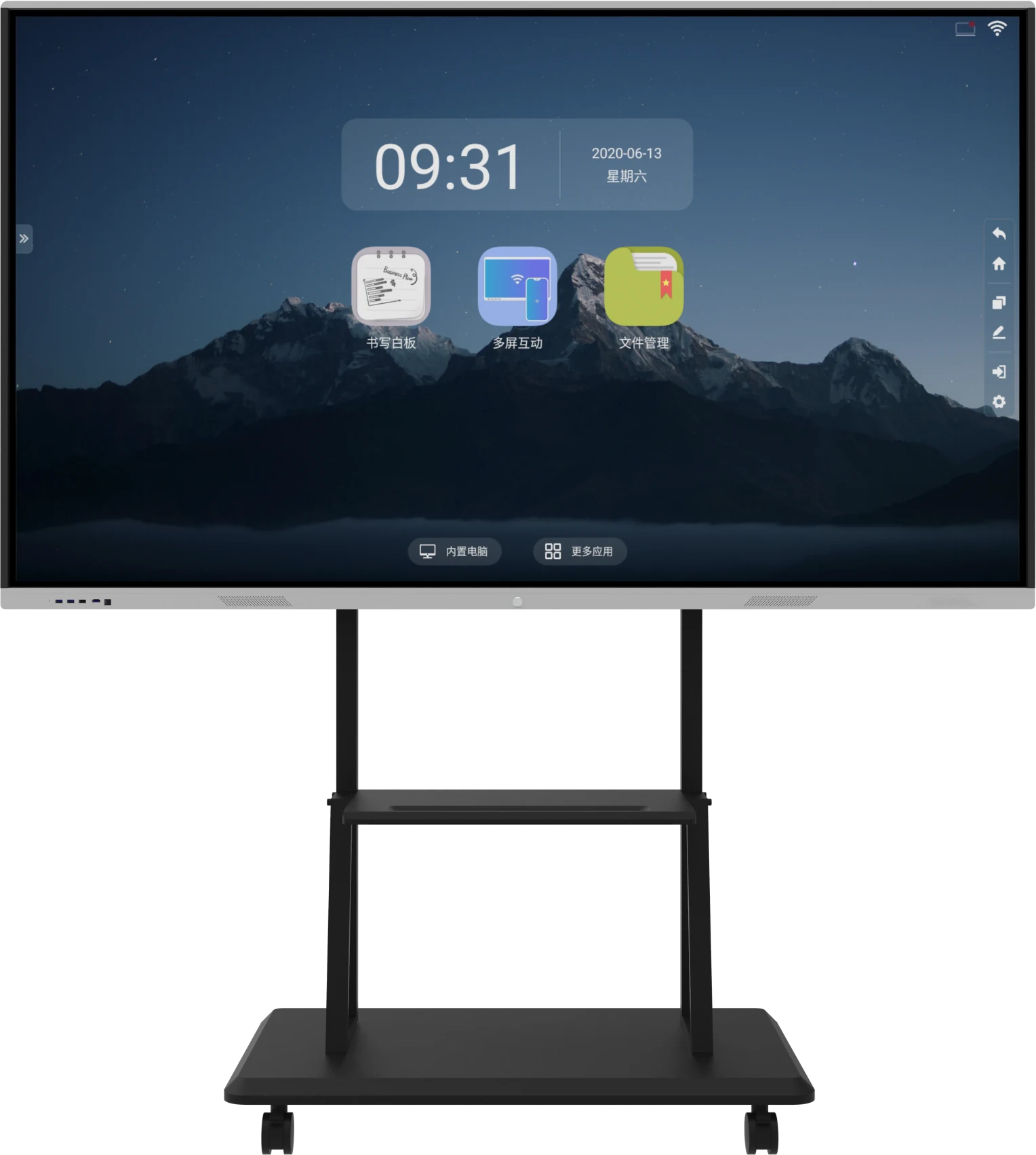
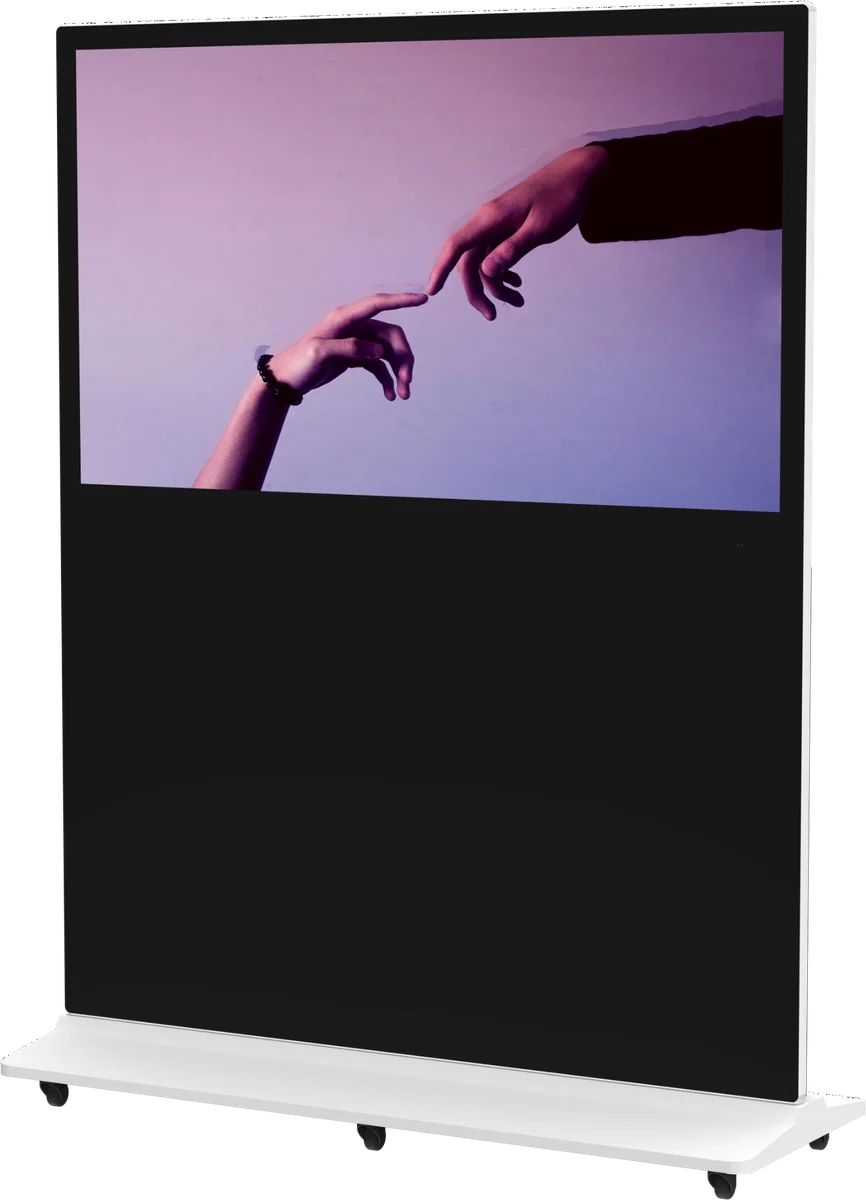
4K interactive flat panels at 65″, 75″ and 85″, with infrared multi-touch, a dual Android and Windows architecture, and camera and microphone array built in. One unit replaces the display, the whiteboard, the projector and the room PC.
Supplied unbranded for OEM, or under your own brand. Teaching software, LMS integration and content libraries are yours — the panel runs whatever you put on it, and it is compatible with the mainstream conferencing platforms out of the box.
Display and touch
| 65″ | 75″ | 85″ | |
|---|---|---|---|
| Resolution | 3840 × 2160 | 3840 × 2160 | 3840 × 2160 |
| Active area | 1428 × 804 mm | 1650 × 928 mm | 1895 × 1066 mm |
| Pixel pitch | 0.372 mm | 0.4296 mm | 0.4935 mm |
| Brightness | 400 cd/m² | 400 cd/m² | 400 cd/m² |
| Contrast ratio | 1200:1 | 1200:1 | 1200:1 |
| Colour depth | 1.06 billion (10-bit) | ||
| Response time | 8 ms | ||
| Viewing angle | 178° horizontal / 178° vertical | ||
| Panel life | 50,000 hours minimum | ||
| Backlight | LED, LG panel | ||
Touch is infrared, 20 to 24 simultaneous points, in a 13.7 mm bezel. The number that matters to a teacher is stylus recognition: a single pen writes with a 2 mm tip, and with five pens on the board at once each is still recognised at 3–3.5 mm. Characters as small as 10 × 10 mm stay legible — which is the difference between a board that can hold a worked equation and one that can only hold headings.
Compute, ports and power
| Embedded system | ARM quad-core Cortex-A53 at 1.5 GHz, Mali-450 MP4 graphics, Android |
| Optional PC module | Intel i3 / i5 / i7, 4 GB, 500 GB HDD or 128 GB SSD, Windows |
| Switching | One-touch changeover between the two systems |
| USB | 3 × USB 3.0, front-facing |
| Touch output | 2 × USB type-B, front-facing |
| Network | RJ45 plus integrated Wi-Fi |
| Control | RS232 |
| Audio | Coaxial out, headphone out, 2 × 10 W internal speakers |
| Storage | SD card slot |
| Power | 100–240 V, 50/60 Hz |
| Consumption | ≤ 180 W (65″), ≤ 320 W (75″), ≤ 380 W (85″); standby ≤ 0.5 W |
| Operating range | 0 °C to 50 °C, 10–90% RH non-condensing |
Android and Windows versions are specified per order rather than fixed — the OS that ships in one market is rarely the one an education authority in another will accept. Tell us what your deployment requires.
Weights and shipping dimensions
Published up front because on a panel this size freight is a material part of the landed cost, and you cannot quote a school district without it. Gross weights include heavy-duty carton and wooden pallet.
| 65″ | 75″ | 85″ | |
|---|---|---|---|
| Net weight | 47.8 kg | 61 kg | 74.4 kg |
| Gross weight | 57 ± 1.5 kg | 75 ± 1.5 kg | 95 ± 1.5 kg |
| Unit size (W×D×H) | 1516 × 940 × 97 mm | 1737 × 1065 × 102 mm | 1990 × 1210 × 109 mm |
| Carton size | 1648 × 1064 × 255 mm | 1923 × 1215 × 275 mm | 2153 × 1352 × 260 mm |
| Carton volume | 0.447 m³ | 0.643 m³ | 0.757 m³ |
| Housing | Extruded aluminium, silver or black | ||
| Mounting | VESA, 4 × M8 | ||
Room hardware
A 48 MP auto-focus camera and a six-element microphone array are built into the bezel, with pickup across a 10 m room and active noise reduction. For a classroom that also has to run remote sessions, this removes the separate conferencing kit and the cabling that comes with it.
- Anti-glare layer available on the tempered glass, for rooms that cannot control daylight
- Wireless screen mirroring from laptop, tablet or phone, with two-way control and annotation
- Compatible with mainstream conferencing platforms rather than locked to one
- Dual magnetic stylus holders moulded into the front bezel
- Five-finger long press blanks the screen for power saving; scheduled and one-touch power control
- External source auto-detect and display on connection
- Supplied with remote, power cable, manual and warranty card; stylus pair optional
Standard warranty is one year on the panel and one year on the complete unit. Extended terms are quoted against volume.
What we change per order
- Panel size and whether the PC module is fitted at all
- Android and Windows versions, and which one boots by default
- Bezel colour, boot logo and packaging artwork under your brand
- Anti-glare treatment, where the installed rooms have daylight problems
- Mains input and plug type for the destination market, with the certification route that follows
- OSD language set and pre-installed application load
The full OEM and ODM process covers how a non-standard build runs. Related: public-sector terminals share the same Intel and Android board families, and video walls cover lecture theatres too large for a single panel. Corridor and canteen screens across a campus are indoor signage on the same Android platform, so one content system drives the whole estate.
Specify an interactive panel
Tell us the size, the quantity and the market it ships to. Feasibility, indicative MOQ and tiered pricing come back within one business day.