
Applications
Glasses-free 3D displays
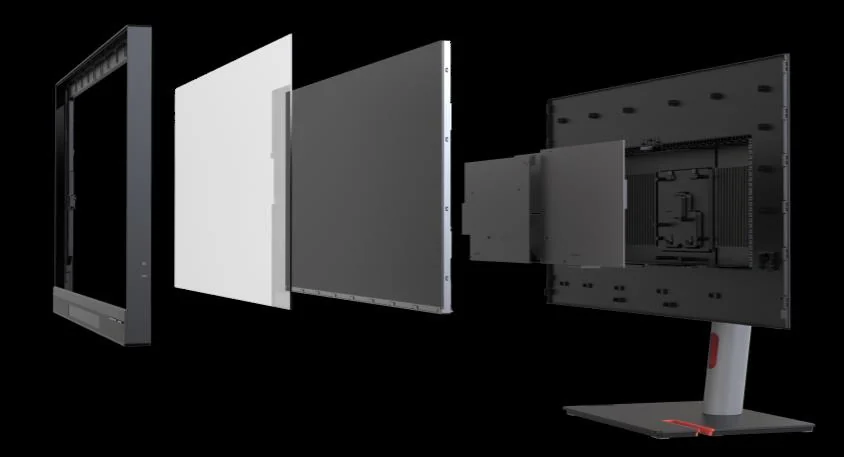
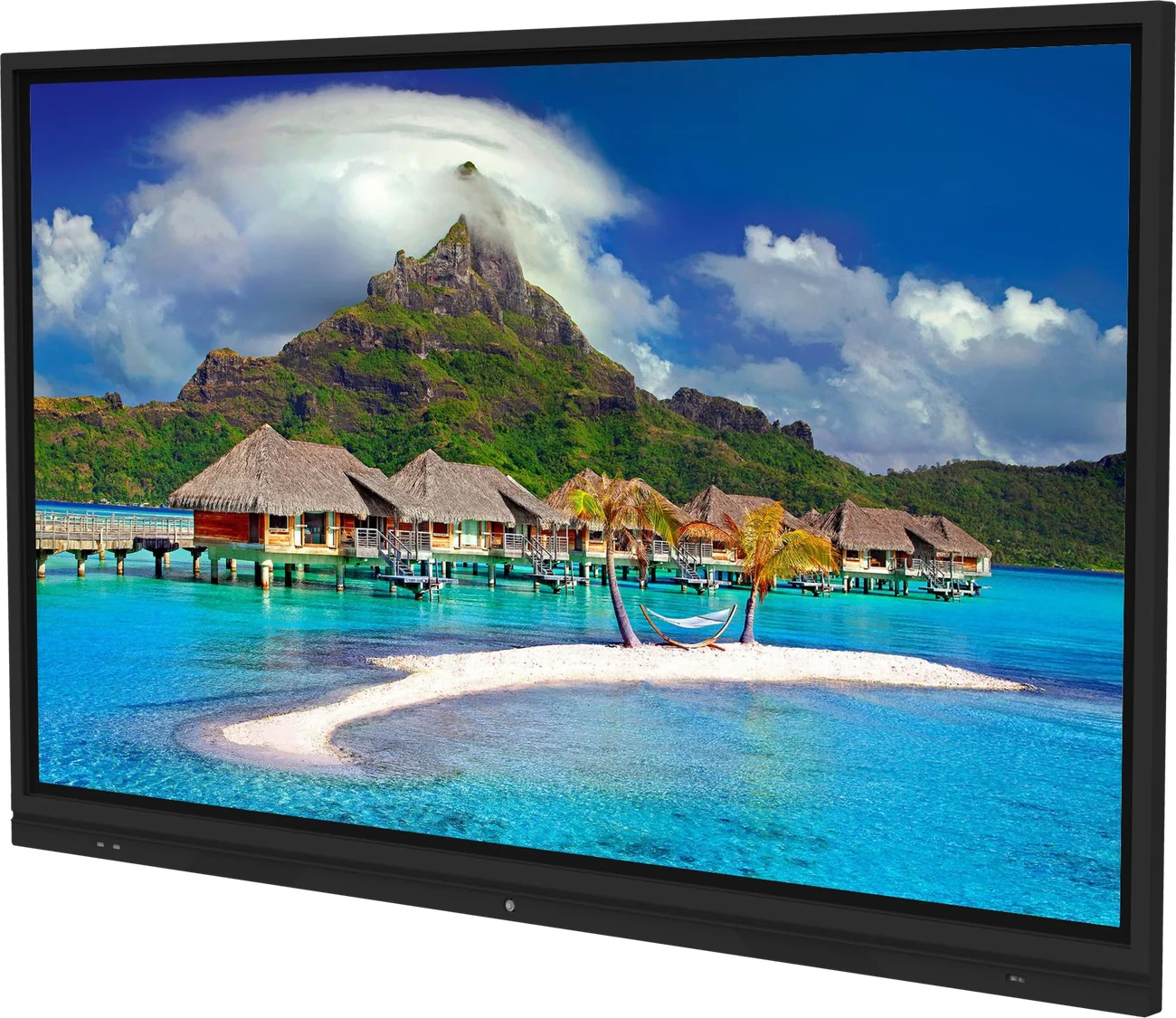
Autostereoscopic panels and finished units from 10.1″ to 65″, built on liquid-crystal resin lens with eye tracking — the approach every major brand shipping 3D in 2024 and 2025 converged on. This is the one product line where the optics, the lens production and the algorithms are all ours.
Available as a 3D module for integration into your own product, or as a finished display. SDKs for Unity, Android, Windows and C++ ship with either.
Three optical approaches, compared honestly
Glasses-free 3D is a set of trade-offs, not a single technology. Every approach costs you either transmittance, resolution, or the ability to go back to a clean 2D image. We build all three and will tell you which one your application actually wants.
| Lenticular lens | LC resin lens | GPR | |
|---|---|---|---|
| Principle | Lens refraction | Liquid-crystal resin refraction | Spatial division (polarisation) |
| Transmittance loss | −15% | −7% in 2D, −7% in 3D | −10% in 2D, −64% in 3D |
| 2D / 3D switching | Not supported — 2D shows aliasing | Supported | Supported |
| 3D resolution | −8/9, multi-viewer | −1/2, single viewer with eye tracking | −1/2, multi-viewer |
| Suits | Large-format signage: 110″, 98″, 65″ | Monitors (27″), notebooks, tablets (12.1″) | TV, signage, monitors, whiteboards |
Read the transmittance row carefully, because it decides more than it looks. GPR keeps a good 2D image but loses nearly two thirds of its light in 3D mode — workable on a wall-powered signage panel, punishing on anything battery-driven. Lenticular holds a multi-viewer image but cannot return to clean 2D at all, which rules it out for any device that also has to be an ordinary screen. LC resin lens is the only one that stays near-lossless in both modes, and that is why it is the approach the industry settled on.
Our own lens line
The liquid-crystal resin lens is made in-house on a G6 line — imprinting through to cell bonding in one facility, fully automated, with a maximum compatible size of 65″. Before that line came up we bought lens at G3.5 through an OEM, and the difference shows in two places: cutting efficiency is better than the industry norm, and the cost structure is ours to control rather than a supplier’s.
| Lens generation | G6, in-house (previously G3.5 via OEM) |
| Maximum panel size | 65″ |
| Process coverage | Lens design, imprinting, 3D cell ODF, lamination, 3D LCM |
| Panel supply | BOE 8.5-generation TFT-LCD lines |
| Automation | Full line, imprinting to cell bonding in a single facility |
Owning the lens step is what makes a non-standard size or a custom viewing distance a quotable job rather than an impossible one. Most 3D display vendors buy the lens finished and can only offer what their supplier already tools.
The software is the hard part
A 3D panel with no algorithm behind it produces a headache, not an image. Three algorithms have to work together and be tuned to the specific optical stack — which is why we develop them against our own lens rather than licensing a generic package.
| Eye tracking | Monocular, binocular, IR and structured light |
| Interleaving | Static and dynamic interleaving |
| Calibration | At device level and at finished-unit level |
| SDKs | Unity, Android, Windows, C++, OpenXR |
| Applications | 3D player, 3D generator, 3D video calling, real-time 2D-to-3D conversion |
The calibration point deserves emphasis. Every unit needs calibrating twice — once for the lens component and once for the assembled device — because optical alignment tolerances that would be invisible on a 2D panel show up immediately as crosstalk in 3D. That step is in our production process, not something an integrator has to solve downstream.
Above the SDKs sits a global 2D-to-3D layer that converts existing applications in real time without their cooperation — useful where the content library you need to support was never authored in 3D, which in practice is most of it.
Panel programme
Status is stated as it stands. Ask about anything not yet in production and we will give you the current schedule rather than a marketing date.
| Panel | Format | Optics | Status |
|---|---|---|---|
| 10.1″ | Tablet | LC lens + eye tracking | In production |
| 15.6″ 4K | Notebook | LC lens + eye tracking | In production |
| 16″ 3.2K | Notebook, 165 / 260 / 320 Hz | LC lens + eye tracking | In production |
| 27″ 4K | Monitor, 165 / 180 Hz | LC lens + eye tracking | In production |
| 10.95″ WQ | Tablet | TN parallax barrier | Development, 2026 H2 |
| 13.8″ | Tablet | LC lens + eye tracking | Development, 2026 Q4 |
| 31.5″ 16K | Monitor | LC lens + eye tracking | Planned, 2027 Q1 |
| 18.5″ 8K | Gaming | LC lens + eye tracking | Planned, 2027 Q2 |
Where it is worth the money
Glasses-free 3D costs more than a 2D panel of the same size, so it earns its place only where depth carries information or attention. In practice that means CAD and industrial design review, medical and scientific visualisation, retail and exhibition display where dwell time is the metric, education and training with spatial subject matter, and gaming hardware.
Plug-ins are already in place for around twenty design packages including AutoCAD, 3ds Max, Creo and Rhino, so an existing CAD workflow displays in 3D without being rebuilt.
If you are integrating 3D into your own product, the module and SDK route is usually the right one — see the OEM and ODM process for how a custom build runs. For conventional 2D large-format work, the video wall range and other sectors we build for cover it.
Buying glasses-free 3D: what drives the cost
We do not publish a price list for 3D, because the cost of an autostereoscopic display is set less by screen size than by a handful of decisions made before the quote. Knowing them in advance makes the first quote a useful one.
| Decision | What it changes |
|---|---|
| Standard panel or new size | The panels marked in production above are quoted from existing lens tooling. A non-standard size or viewing distance needs a new lens design and imprinting set-up on our G6 line: possible because we own that step, but it adds engineering time and a first-run cost. |
| Module or finished unit | A module is the 3D panel, lens and SDK, ready to fit into your own housing. A finished unit adds the enclosure, electronics, eye-tracking camera and packaging. |
| Optical approach | Lenticular, LC resin lens and GPR differ in lens cost and in whether eye tracking is needed at all. We recommend the one your viewing conditions require, not the most expensive one. |
| Eye-tracking method | Monocular, binocular, IR or structured light, chosen for your lighting and viewing distance. In single-viewer designs it is part of every unit. |
| Panel grade | The same size can come at more than one resolution or refresh rate, for example the 16″ notebook panel at 165, 260 or 320 Hz. Each grade is quoted separately. |
| Quantity | Pricing is tiered by volume. For a new size, the lens tooling is spread across the order, so quantity matters more than it does for a standard panel. |
How a 3D purchase runs
- Send the panel size, viewing distance, module or finished unit, target quantity and what the display is for.
- Within one business day you receive feasibility, indicative MOQ and tiered pricing.
- Samples of in-production panels are the fastest way to evaluate. Sample lead time is confirmed in writing when you place the sample order.
- For a new size or viewing distance, lens design and tooling are scheduled against your specification, and lead time is quoted against it. We do not publish a generic figure.
- Every production unit is calibrated at lens level and again as a finished unit before it ships.
Discuss a 3D programme
Tell us the panel size, the viewing distance and whether you need a module or a finished unit. Feasibility, indicative MOQ and tiered pricing come back within one business day.